
What is “syzygy” and why does it matter?
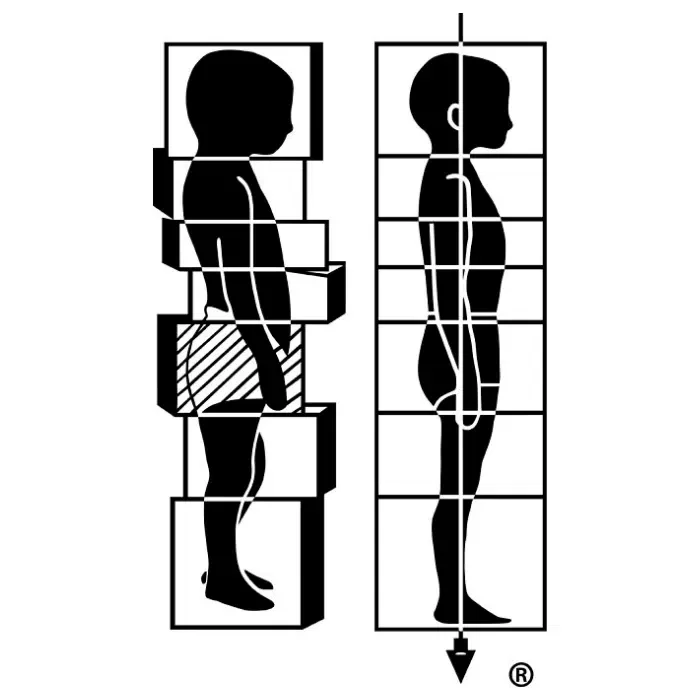
Did you know that the average adult human head weighs 11 pounds? Now, imagine sitting at work on your computer- hunched forward focusing on an important report that’s due at the end of the day. Over the course of that day, those 11 pounds resting even just a little forward because of your slouched posture puts a strain on your neck, upper back, and shoulders.
Even more problematic, the fascial system in your body- the connective tissue that provides rigid structure- gets locked into this posture keeping you in that held position.
Now, let’s re-imagine how you would feel if you were able to consciously maintain a neutral posture, keeping that 11 pound head resting right on top of your body, where it wants to be.
This is why structural alignment matters.
When we’re in disorganized alignment and in poor posture, gravity becomes our enemy. Our neck and shoulders start to ache, our hips start to tighten up, or we start developing migraines. But when we’re in healthy structural alignment, gravity becomes our friend. We start moving in ways that feels refreshing and our mood stays upbeat and resilient.
This is your body in “syzygy” - perfect alignment - and in this context, healthy alignment in gravity.
So how do we shift our postural alignment? The truth is, stretching can only do so much. Corrective postural exercises are great and can help, but even that isn’t going to “loosen” up what’s tight. Your body needs intelligent “input” into your neuromuscular system to help teach it to relax and soften.
Rolfing can help you reconnect with your body and relearn what healthy alignment looks like for you. The scenario above is an overly simplified example of how poor posture can impact your well-being. The reality is that life is complex with its twists and turns and, likewise, your body’s structure has left/right, front/back, side-to-side, and diagonal fascial restrictions that would benefit from hands-on external support in order to "free it up.”
Our fascial restrictions and patterns are a result from our life experiences- hobbies, work responsibilities, injuries, emotional joys and traumas, exercise habits, genetics, and so forth- everything that makes you you. Your body’s postural patterns aren’t something to fix. It’s something to be met with receptivity and intelligent physical touch in order for it to unravel and be freed on its own volition. At the end of the day, when you feel more in alignment in your body, you will feel more aligned with your inner self.